
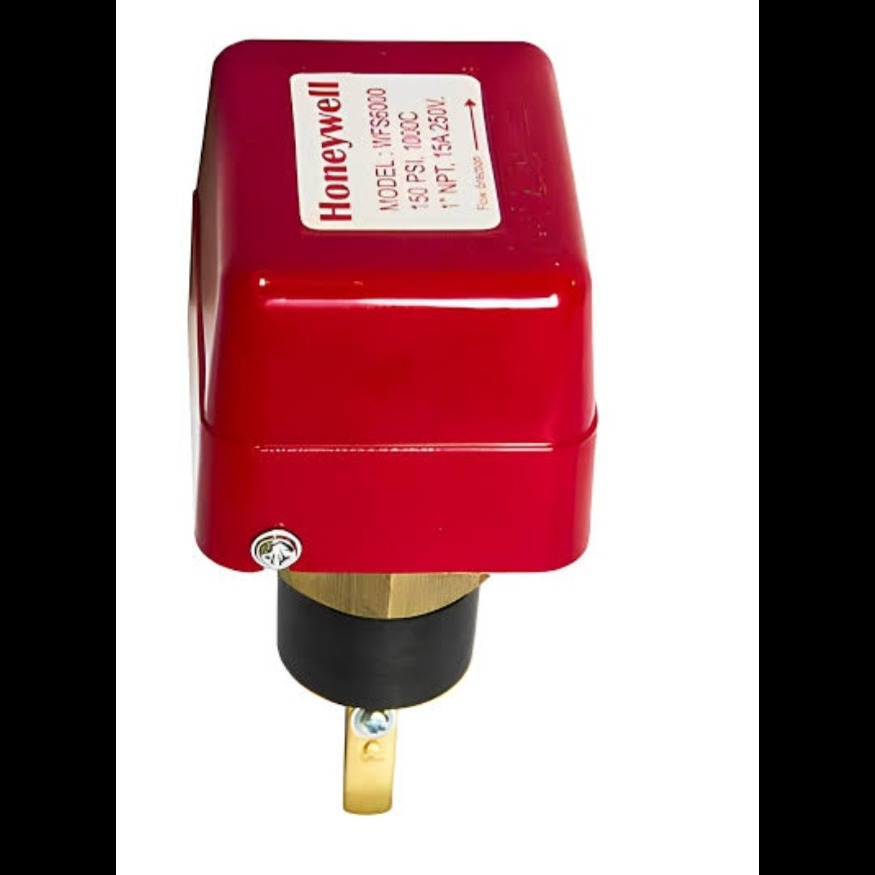
Honeywell water flow switches are a key component in various liquid-based systems, designed to monitor the flow of water and other non-corrosive fluids. They act as safety and operational controls, preventing equipment damage and ensuring proper system function.
How They Work
Most Honeywell water flow switches are of the paddle type. Here's a general overview of their operation:
* The Paddle: A physical paddle, or vane, is inserted into the flow path of the pipe.
* Flow Detection: When water or another liquid flows through the pipe, it exerts pressure on the paddle, causing it to be displaced or deflected.
* Signal Generation: This movement of the paddle is linked to a switch, typically a single-pole, double-throw (SPDT) microswitch.
* Circuit Control: When the flow rate exceeds or drops below a pre-set level, the paddle's position changes, causing the microswitch to close one circuit and open another. This can be used to:
* Activate an alarm.
* Start or stop a pump.
* Divert the flow.
* Shut down a system.
Key Features and Specifications
Honeywell offers a range of water flow switches, with the WFS series being a prominent example. These switches are known for their rugged construction and reliable performance. Common features and specifications include:
* Application: Suitable for use in liquid flow lines carrying water or other non-hazardous fluids that won't harm brass or phosphor bronze. They are not intended for use in hazardous atmospheres.
* Operating and Withstand Pressure: The switches are designed to handle specific operating pressures (e.g., up to 10 kgf/cm² or 1000 kPa) and can withstand even higher pressures (e.g., up to 17.5 kgf/cm² or 1750 kPa).
* Temperature Range: They are rated for specific fluid temperatures, with many models capable of handling fluids up to 100°C (212°F). They should not be used on lines with liquids below 0°C.
* Electrical Ratings: The switches have specific electrical ratings for different voltages (e.g., AC 125V, AC 250V) and can handle certain resistance, lamp, and motor loads.
* Durability: Honeywell flow switches are built for longevity, with specifications often listing a high number of cycles for both the contact points and the bellows.
* Adjustability: Many models allow for a certain degree of flow rate adjustment, which can be done by adjusting a screw on the device.
Applications
Honeywell water flow switches are used in a wide variety of systems for operational control and safety, including:
* HVAC Systems: Monitoring flow in condensers, heat exchangers, and chillers.
* Fire Protection Systems: Detecting water flow in sprinkler systems.
* Water Treatment Plants: Ensuring proper fluid flow in various processes.
* Industrial and Commercial Use: In boilers, heat pump installations, and agricultural irrigation.
Installation
Proper installation is crucial for accurate and reliable performance. Key considerations for installing a Honeywell water flow switch include:
* Mounting Position: They can be mounted horizontally or vertically.
* Clearance: It's important to have a straight run of pipe on both sides of the switch (typically at least 5 times the pipe's diameter) to ensure laminar flow and accurate operation.
* Direction of Flow: The arrow on the switch's housing must be aligned with the downstream direction of the fluid.
* Paddle Size: If the paddle is not pre-installed, you must select the correct paddle size for the specific pipe diameter.